
I went on holiday to Romania with my children this summer and did something I’d been putting off for 2 years. I got blood tests done.
I reviewed the results with ChatGPT and the picture was clear enough that I stopped negotiating with myself. Everything had to take a turn, and health moved to the top of the list.
Then the harder problem showed up. Knowing what to change is easy. Living it every week is the part people quit on.
So I built the scaffolding.
The chef
I created a custom project holding my habits, my goals, and my real availability. Because it was connected to my calendar and my planning tools, it already knew how busy I was and how much time I realistically had for cooking.
Inside that project I set up an assistant called Cheffy. Its only job is to be my chef. I told it what I needed: meals that support lower cholesterol and steady insulin, fitted to the time I actually have.
Cheffy’s first recommendation was a 24-hour fast once a week, plus 18:6 fasting in between. I agreed and started. I’m 4 weeks in. Feeling great already!
The gap nobody talks about
The meals were good. Managing them was not. Thinking through every ingredient, every quantity, every shopping list, every week, is a second job sitting on top of the first one.
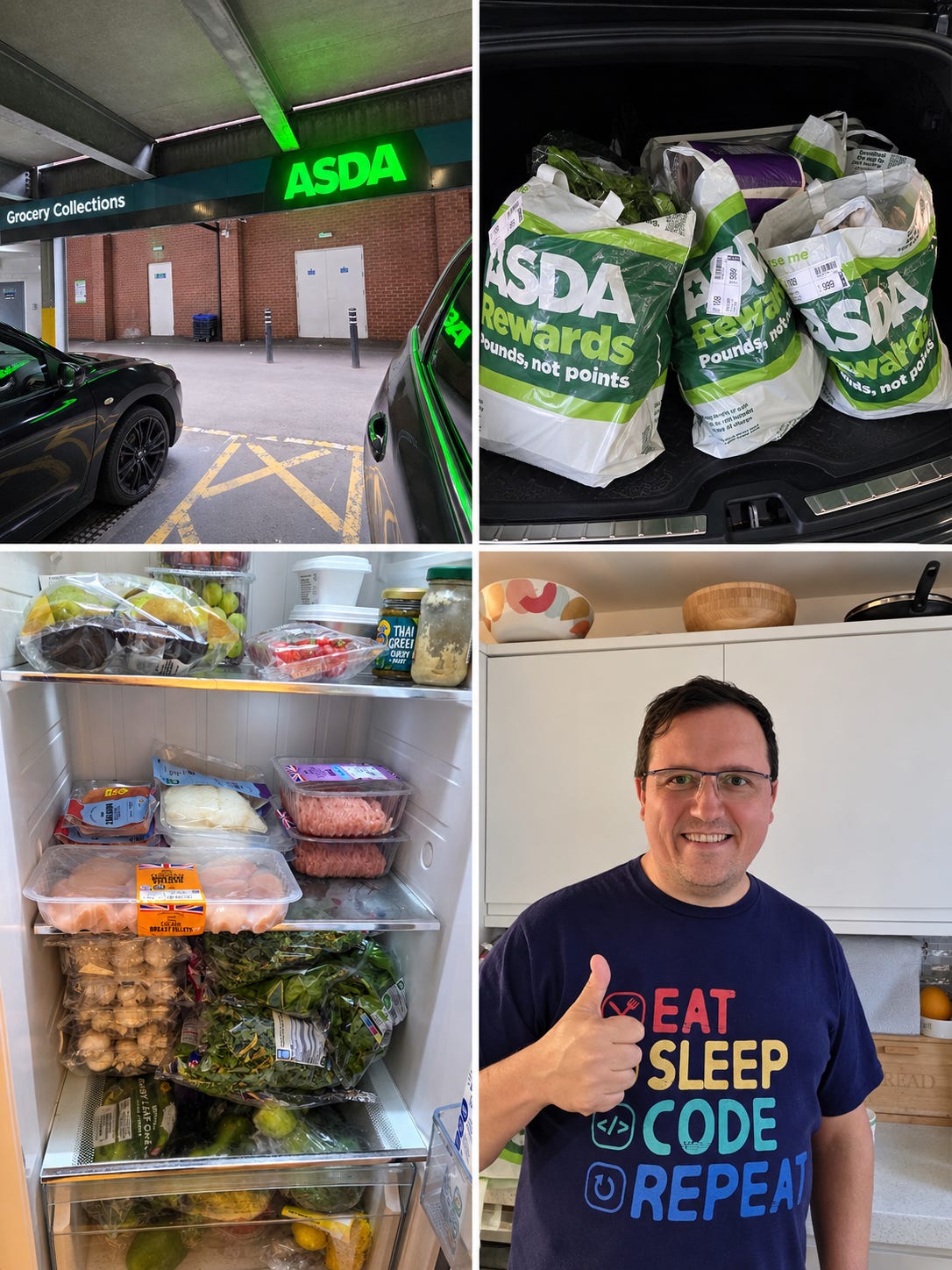
So I gave Cheffy a second job. Use the meal plan, build the week’s shopping list, log into my ASDA.com account, add everything to the basket, and place the order for Click & Collect.
That became a recurring task. Every Friday it works out the next few days for me, and I get a notification and an email: shall we place a new order this week?
That question matters. Some weeks I’m travelling. Some weeks I can’t cook anything. The system asks instead of assuming.
I simplified it yesterday
For a while this ran on two assistants. Cheffy did the food, and a separate coding agent handled the ordering. It worked. It was also more machinery than the job needed.
Yesterday I consolidated everything into one assistant running on Grok Bot. Cheffy now handles the planning, the list, and the order in a single thread, which means one place to correct it and one place to check it.
That’s the pattern I keep landing on. The first version of anything you automate should be a bit too complicated, because that’s how you learn which parts actually earn their place. Then you cut.
The part I actually feel
I placed the order, drove to the collection point, and was back home 25 minutes later. Start to finish, that’s the entire physical cost of eating properly for a week.
No aisles. No decision fatigue. No standing in a supermarket at 7pm trying to remember whether I already have olive oil.
When the shops are properly integrated with AI agents, and payment protocols like Google’s AP2 are live at scale, this stops being a setup one person hacked together and becomes how everyone eats. The upside isn’t efficiency. It’s the hours that go back to your family.
Why this works, and why willpower doesn’t
A health decision that lives only in your intentions is just a wish. You promise yourself on Sunday that this week will be different. By Wednesday evening, work gets heavy, decision fatigue sets in, and you default to convenience.
Willpower is finite. It dies by week three. What survives is the scaffolding you build around your daily routines. If your plan depends on you making heroic choices every single evening, you’ve already lost.
The same logic applies to the logistics. The hardest part of eating well isn’t eating. It’s the recipe research, the manual shopping lists, the meal planning, the standing in the aisle at 7pm wondering if there’s still olive oil at home. Remove the mental load and healthy choices become the default instead of a daily fight.
And this is where most people are still missing the point of AI. They use it to generate generic text faster. The real leverage is automating the friction out of your physical life, so ordinary chores become standing systems that run whether or not you’re tired or busy.
What I’ll report
Four weeks tells you nothing about cholesterol or insulin, and I’m not going to dress it up as a result. What I can say is that I haven’t skipped a single plan yet, which is more than I managed doing this manually.
The part I’ll defend today is the mechanism. A health decision that lives in your intentions dies by week three. One that lives in a weekly system, with a standing order and an assistant that asks permission before spending your money, is a different thing entirely.
When I have something honest to report, I’ll write it up.
If you need something similar set up, let me know.